What's wrong with classroom behavior charts: Why shaming backfires
© 2022 GWEN DEWAR, PH.D., ALL RIGHTS RESERVED
 opens Paradigm file
Imagine y'all're at work when you see it: Your proper name on the wall, with a annotation from the boss that everyone can encounter. Your behavior is "unsatisfactory."
We can recall upwardly different versions of this scenario. Perchance it'due south a simple visual message – your name pinned to a crimson traffic light. Perchance your deficiencies are communicated with a more positive spin — "Nosotros want to run across you ameliorate!"
But either way, I'm betting you feel bad. Your perceived shortcomings are being broadcast to the earth, presumably to embarrass or shame you into changing your ways. Does information technology actually work similar that – make you feel inspired to do better?
Or does the experience damage morale? Undermine your workplace relationships? Spark anger? Make y'all question whether yous vest in this workplace at all?
Intuitively, it doesn't seem like a proficient approach to management, and Microsoft Chairman Bill Gates appears to agree. As he wrote in a recent editorial, "we would never have idea about using employee evaluations to embarrass people…" And nonetheless this is precisely what's happening to many children in school.
Jennifer Bradley writes about information technology on her education website, opens in a new windowBeyond the stoplight. To encourage better behavior, teachers are making public examples of the kids who don't measure upward, posting their names on blackboards or posters for all to see.
Bradley understands how this happens. In her offset year of education, she tried information technology herself. "That's what I was told to do, and that's what my teachers did when I was in school," she writes.
"But and then I started paying attention to the hurt, the shame, the frustration, and even the apathy in the eyes of those students whose names appeared in chalk day after day. They were half dozen and seven years old, and I knew they deserved better."
At present she's on a cause to raise awareness and stop the practice. But is she overreacting? Is my workplace idea experiment misleading? Are blackboard announcements and behavior charts really such a bad idea?
Consider what happens when y'all are singled out for disapproval or rejection. Every bit you get conscious of the fact, your heart rate and blood pressure rise. Your torso produces a surge of the stress hormone cortisol and your immune system responds by increasing activity that causes inflammation.
Do children experience similar effects? Experiments demonstrate that they do. Consider this unproblematic procedure.

An developed asks a 4-year-sometime to work on a puzzle.
Information technology won't be too hard, the adult explains. "Nigh children your age can stop this task in 3 minutes."
The adult shows the child a timer, and tells the child information technology will ring after 3 minutes has passed.Set, get fix, go!
The child works on the task, but the developed has a secret: She makes sure that the timer will ringbefore the child has finished.It's a test rigged to ensure that the child will fail.
In one case the timer rings, the adult tells the child, "Time is up, you lot did not cease before the bong," and and so the adult remains silent and still for xxx seconds afterwards.
That's the process. In that location is no behavior nautical chart, no embarrassing news broadcast to a child's peers. Simply simple failure in front of an impassive stranger.
But that's enough. Many kids in this situation feel immediate feelings of shame, and these feelings are accompanied by a spike in cortisol. The more intense the shame, the bigger the spike. And these kids too feel boring cortisol regulation: Cortisol levels are notwithstanding elevated xl minutes later (Lewis and Ramsay; Mills et al 2008).
That slow recovery fourth dimension is worrying, considering it'due south ho-hum recovery from cortisol spikes that can crusade health bug over the long term. Chronic feelings of shame may contribute to chronic affliction (Mills et al 2008; Dolezal and Lyons 2017).
So frequent shaming is bad for a child'southward wellness. What nigh behavior? Isn't the idea that shame is supposed to motivate improvements, so the kids stop doing the things that get them into trouble?
Why shaming doesn't piece of work

Researchers similar June Tangney have devoted their careers to agreement the effects of shame, and they see consistent show that shame, as opposed to guilt, has anti-social furnishings.
When we feel guilty, we regret the furnishings our behavior has had on other people. We are motivated to brand amends.
Only when we feel shame, we experience very threatened. We become desperate and defensive. Our primary concern is to hide or deflect the blame.
For some personality types, this leads to aggression. For example, take an experiment conducted past Sander Thomaes and his colleagues on 160 schoolhouse kids betwixt the ages of ten and 13.
The researchers screened the kids for narcissistic tendencies, request them if they agreed with statements similar
"Without me, our form would be much less fun," and
"Kids similar me deserve something extra."
So each child was told a prevarication: They would compete in a contest of reaction time against another, unseen child working remotely on some other computer.
In reality, there was no 2d kid; the "opponent" was automatic. But some kids – those randomly assigned to the shame-inducing condition – were tricked further:
They were told that their reaction times would be ranked and posted on a public website.
Before beginning to play, there were too shown that their opponent currently ranked at the bottom of the list. Take detect, said the experimenter. " This means you should win hands!"
Subsequently this preparation, the kids played a circular of the game, and then they were given the bad news: They had lost!
They were shown their proper noun on the web folio – ranked expressionless last.
Just on a second round, the kids were allowed to win, and offered the opportunity to be hateful. They were told they could push button a push and blast their defeated opponent with a very loud noise.
Who punished the opponent with this aggressive blast?
It was the kids who showed narcissistic tendencies and high self-esteem. Merely only if they had been subjecting to the shaming condition ( Thomaes et al 2008).
Kids who had been shamed by having their names posted at that bottom of the rankings actually behaved worse, not amend. When kids were merely informed (privately) that they'd lost the game, they behaved less aggressively.
Can we conclude that this happens in everyday life? It'southward reasonable to note that this is merely 1 study. We should be cautious.
Only there is corroborating evidence that links shaming with a design of increased misbehavior.
For instance, in 1 study, researchers followed 380 kids for a period of eight years, starting when the children were between 10 and 12 years old. At three time points, the researchers tested children on their tendencies to experience guilt or shame: Kids were asked to anticipate how they would feel in response to diverse, everyday situations.
The researchers also measured behavior outcomes, and they constitute a connectedness with guilt and shame. Kids who anticipated they'd feel guilty in response to wrongdoing were less probable, as immature adults, to use illegal drugs. They were also less likely to go arrested or serve fourth dimension in jail.
By contrast, kids prone to feelings of shame were more likely to use illegal drugs, and more likely to report driving nether the influence. And these links remained statistically meaning after controlling for assailment levels and parents' socioeconomic status (Stuewig et al 2015).
Then there's good reason to recollect that shaming can brand some kids conduct in means that are more than aggressive or detrimental to others.
Studies besides propose that frequent feelings of shame predict adverse developmental changes – similar a less mature pattern of brain growth,and decreases in kind, helpful, "prosocial" behavior over fourth dimension (Whittle et al 2016; Roos et al 2014).

And what about the kids who don't act out, or behave aggressively? Shame can likewise make kids feel despondent or helpless.
Instead of assertive they can modify for the better, children may conclude that they are also incompetent, weak, or stupid to carry differently.
The idea is supported by opens in a new windowexperiments on preschoolers, where kids were asked to imagine themselves attempting a task and so existence told by an adult, "I'm disappointed in y'all."
Instead of beingness motivated to improve their performance, these children were more inclined to view themselves negatively and to give up. And this waswithout an audience of peers (Kamins and Dweck 1999).
What might have happened if the children had been chastised in front end of a class? We can't be sure, but observational studies are suggestive.
Kids who are perceived to be "in trouble" with the teacher are more likely to get rejected by their peers. In that location'south the potential for a downwardly screw, here. Kids feel shamed, get angry or demoralized, lose continuing among their peers, and human action worse.
Then I think we should abandon the classroom behavior charts. I'm not claiming that children will be irreparably harmed by them. Or that every child volition dislike them. Nor am I challenge that behavior charts volition turn kids into aggressive jailbirds.
Just information technology's obvious that classroom behavior charts can create feelings of shame, and the research on shame is clear.
Shaming induces toxic stress. Information technology serves every bit a marker for suboptimal brain development and social evolution. Information technology prompts some kids to bear more aggressively, and makes other kids feel defeated and helpless.
And nosotros're not left without options.
On the contrary, decades of enquiry suggest that the most effective approach to beliefs emphasizes warmth, sensitivity, and positive encouragement.
This was axiomatic in the "I'grand disappointed in you" experiments on preschoolers. Kids were more probable to bounce back from failure when adults said instead, "How can y'all exercise it ameliorate?" And studies show that sensitive, effective behavioral coaching, and opens in a new windowstrong personal teacher-student relationships, are the most powerful means to steer kids toward amend outcomes.
At that place are adept alternatives to public shaming. Let'due south use them, and assistance kids recover gracefully from their mistakes.
For ideas, see these opens in a new windowtestify-based tips for positive parenting, too as these opens in a new windowtactics for handling disruptive and aggressive behavior.
In addition, for teachers seeking assistance in the classroom, run across these opens in a new windowtips from Jennifer Bradley.
Special thanks to David Martin for introducing me to Jennifer Bradley's essays and for gathering information nearly the prevalence of classroom behavior charts in some parts of the United States. David Martin has written near his family'southward negative experiences with classroom behavior charts. Y'all tin read his account opens in a new windowhither.
Portions of this text appeared previously in a weblog post entitled "What's incorrect with behavior charts?" for BabyCenter.com.
References: What's wrong with classroom beliefs charts?
Dickerson SS, Gruenewald TL, Kemeny ME. 2004. When the social cocky is threatened: shame, physiology, and health. J Pers. 72(6):1191-216.
Dolezal L and Lyons B. 2017. Health-related shame: an melancholia determinant of wellness? Med Humanit. 43(iv):257-263.
Kamins M and Dweck C. 1999. opens in a new windowPerson versus process praise and criticism:Implications for contingent self-worth and coping. Developmental Psychology 30(3): 835-847.
Lewis K and Ramsay D. 2002. Cortisol response to embarrassment and shame. Child Dev. 73(4):1034-45.
Mills RS, Imm GP, Walling BR, Weiler HA. 2008. Cortisol reactivity and regulation associated with shame responding in early on childhood. Dev Psychol. 44(5):1369-fourscore.
Roos Due south, Hodges EV, Salmivalli C. 2014. Do guilt- and shame-proneness differentially predict prosocial, aggressive, and withdrawn behaviors during early on adolescence? Dev Psychol. 50(iii):941-half dozen.
Stuewig J, Tangney JP, Kendall S, Folk JB, Meyer CR, Dearing RL. 2015. Children's proneness to shame and guilt predict risky and illegal behaviors in young adulthood. Child Psychiatry Hum Dev. 46(2):217-27.
Tangney JP, Stuewig J, Martinez AG. 2014. Two faces of shame: the roles of shame and guilt in predicting recidivism. Psychol Sci. 25(3):799-805.
Tangney JP, Stuewig J, Mashek D, Hastings M. 2011. Assessing Jail Inmates' Proneness to Shame and Guilt: Feeling Bad About the Behavior or the Self? Crim Justice Behav. 38(seven):710-734.
Thomaes S, Bushman BJ, Stegge H, Olthof T. 2008.Trumping shame by blasts of racket: narcissism, self-esteem, shame, and assailment in young adolescents. Child Dev 79(6):1792-801
VanDerhei Due south,Rojahn J, Stuewig J, McKnight PE. 2014. The result of shame-proneness, guilt-proneness, and internalizing tendencies on nonsuicidal cocky-injury. Suicide Life Threat Behav. 44(iii):317-30.
Whittle S, Liu Thou, Bastin C, Harrison BJ, Davey CG. 2016. Neurodevelopmental correlates of proneness to guilt and shame in boyhood and early machismo. Dev Cogn Neurosci. 19:51-7.
Content of "What'southward wrong with behavior charts: Why shame backfires" last modified ane/19
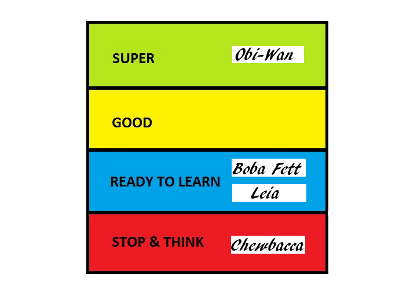
Image of silly behavior chart by Parenting Scientific discipline
epitome of sorry boy past Benedic Belen / flickr
image of angry boy by David Salafia / flickr
image of sad preschooler by Emushok
Source: https://parentingscience.com/whats-wrong-with-classroom-behavior-charts/

Post a Comment for "What's wrong with classroom behavior charts: Why shaming backfires"